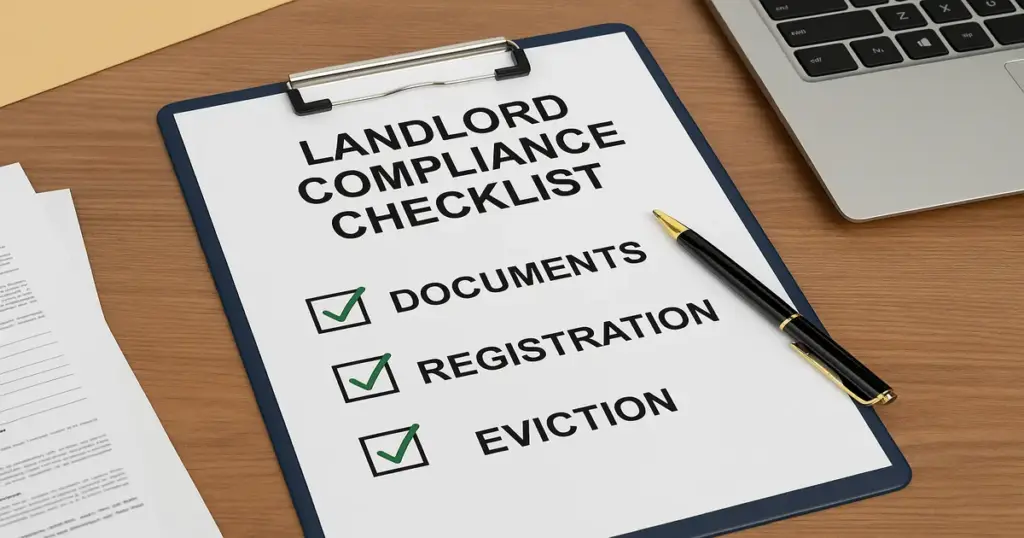
Landlord Compliance Checklist: Documents, Registration & Eviction under the New Bill
The Renters’ Rights Bill is transforming the private rental sector in England and Wales, bringing new legal obligations that every landlord must understand. The reforms aim to modernize how landlords operate, enforce stronger tenant protections, and ensure all rented homes meet higher standards of safety and fairness.
For landlords, staying compliant is no longer optional; it is essential. This landlord compliance checklist: documents, registration & eviction under the new Bill provides a detailed breakdown of the key requirements to remain fully compliant in 2026 and beyond.
Understanding the New Legal Framework
The Renters’ Rights Bill replaces outdated tenancy rules with a new legal framework based on transparency, accountability, and professionalism. It abolishes Section 21 “no-fault” evictions, introduces a national landlord register, and strengthens enforcement for those who fail to comply.
The changes will impact every stage of the rental process — from property advertising and tenant referencing to document management and eviction procedures.
Therefore, following this landlord compliance checklist: documents, registration & eviction under the new Bill will help ensure landlords meet all legal standards, avoid penalties, and maintain a strong reputation.
Documents Landlords Must Have Ready
The new system demands landlords maintain comprehensive documentation. Missing or outdated paperwork will not only invalidate eviction notices but could also result in fines or enforcement action.
Every landlord should prepare the following key documents under the landlord compliance checklist: documents, registration & eviction under the new Bill:
Energy Performance Certificate (EPC)
All rental properties must have a valid EPC rating of E or above to achieve EPC C by 2030. Tenants must receive a copy before moving in.
Gas Safety Certificate (CP12)
A gas safety check must be conducted annually by a qualified engineer. The certificate must be provided to tenants within 28 days and before new tenants occupy the property.
Electrical Installation Condition Report (EICR)
Every rental property must undergo an electrical safety inspection at least every five years. The report should confirm that all wiring, sockets, and electrical fixtures are safe and compliant.
Deposit Protection Certificate
Deposits must be registered within 30 days with an approved protection scheme. Tenants must receive confirmation of registration and prescribed information.
“How to Rent” Guide
A government-issued “How to Rent” guide must be given to tenants at the start of every tenancy. This is now a mandatory compliance step.
Smoke and Carbon Monoxide Alarm Test Records
Landlords must ensure working alarms are fitted and tested before each new tenancy begins.
Right to Rent Documentation
Landlords must check tenants’ immigration status and retain copies of identification documents as part of legal compliance.
Tenancy Agreement
The tenancy agreement must include updated clauses consistent with the Renters’ Rights Bill, including fair rent review processes and references to periodic tenancies.
Keeping these records organized is critical. A landlord who cannot produce these documents risks invalidating any eviction notice under the landlord compliance checklist: documents, registration & eviction under the new Bill.
Landlord Registration Requirements
A key feature of the new law is the national landlord registration system. Every landlord will be required to register through the government’s new Property Portal.
This system will:
- Record landlord identity and contact information.
- Confirm compliance with safety and deposit regulations.
- Provide transparency for tenants searching for verified landlords.
- Allow enforcement agencies to monitor and penalize rogue operators.
Failure to register may result in:
- Fines or civil penalties.
- Inability to legally serve notices or recover possession.
- Public listing as a non-compliant landlord.
To meet the landlord compliance checklist, which includes documents, registration & eviction under the new Bill, landlords should register promptly once the portal launches and keep their information up to date.
Eviction Rules Under the New Bill
The most significant change for landlords is the abolition of Section 21. This means landlords can no longer evict tenants without a specific reason. All future evictions must use Section 8, supported by valid grounds for possession.
Knowing how to navigate the new eviction process is a crucial part of the landlord compliance checklist: documents, registration & eviction under the new Bill.
Valid Grounds for Possession
Landlords can regain possession under certain approved circumstances, such as:
- Rent arrears (two months or more).
- Persistent late payment of rent.
- Antisocial or criminal behaviour.
- Property damage or neglect.
- Landlord’s intention to sell or move in.
Each ground has a defined notice period, typically ranging from two weeks to two months, depending on the reason.
Updated Section 8 Process
- Serve Form 3 (Notice Seeking Possession) citing the correct legal ground.
- Wait for the notice period to expire.
- Apply to court if the tenant does not vacate.
- Provide all required documentation as evidence.
Incorrect paperwork or notice timing will cause delays or dismissal. Therefore, landlords must master every step in the landlord compliance checklist: documents, registration & eviction under the new Bill to prevent legal setbacks.
Compliance with Digital Reforms
The government aims to modernize the entire possession system with digital submissions, tracking, and evidence uploads.
Landlords will be able to:
- File Section 8 notices online.
- Upload rent ledgers, safety certificates, and proof of service.
- Track case progress through an online dashboard.
This new digital process is designed to make eviction faster and more transparent, provided landlords follow the correct procedures under the landlord compliance checklist: documents, registration & eviction under the new Bill.
Property Standards and the Decent Homes Requirement
The Decent Homes Standard, previously applied to social housing, will now extend to the private rented sector. Landlords must ensure all properties meet these minimum standards:
- Safe, hazard-free living conditions.
- Adequate heating, insulation, and ventilation.
- No damp, mould, or structural defects.
- Modern kitchen and bathroom facilities.
Failure to comply can result in enforcement notices, fines, or bans from the landlord register.
Maintaining these standards is a key part of the landlord compliance checklist: documents, registration & eviction under the new Bill.
Preparing for Inspection and Enforcement
Local authorities and the new national regulator will have enhanced powers to inspect rental properties and enforce compliance. Landlords must be ready to provide evidence of:
- Registration on the Property Portal.
- Up-to-date safety documentation.
- Proof of repairs and maintenance.
Authorities can impose civil penalties or prosecute landlords who fail to comply.
Being proactive and organized is therefore critical to maintaining compliance under the landlord compliance checklist: documents, registration & eviction under the new Bill.
Professional Landlord Best Practices
To stay ahead of the new regulations, landlords should:
- Review and update all tenancy templates.
- Digitize documentation for easy access.
- Conduct property audits annually.
- Join recognized landlord associations for updates and training.
- Keep accurate rent and communication records.
Landlords who implement these practices will find the new system easier to manage and will avoid costly disputes or penalties.
By following this landlord compliance checklist: documents, registration & eviction under the new Bill, property owners can operate efficiently, lawfully, and confidently.
Conclusion
The Renters’ Rights Bill represents a fundamental shift in how landlords manage tenancies, paperwork, and possession. Full compliance is now the hallmark of a professional landlord.
By maintaining the required documents, registering with the national portal, and following the correct eviction process, landlords will remain legally protected and respected within the new rental landscape.
Use this landlord compliance checklist: documents, registration & eviction under the new Bill as your blueprint for success, ensuring every tenancy runs smoothly, transparently, and in complete alignment with 2026’s reformed housing laws.
Need help now? Contact Landlord Advice UK today for tailored guidance and practical support to future-proof your rental business.