
How to Legally Evict a Tenant in England: Step-by-Step Guide for Landlords
Evicting a tenant in England is a serious legal process that must follow strict rules under the Housing Act 1988, the Protection from Eviction Act 1977, and related regulations. Getting it wrong can result in delays, financial loss, or even criminal penalties. This guide explains how to evict a tenant legally in England, step by step, ensuring landlords act lawfully and efficiently.
Understanding Legal Grounds for Eviction
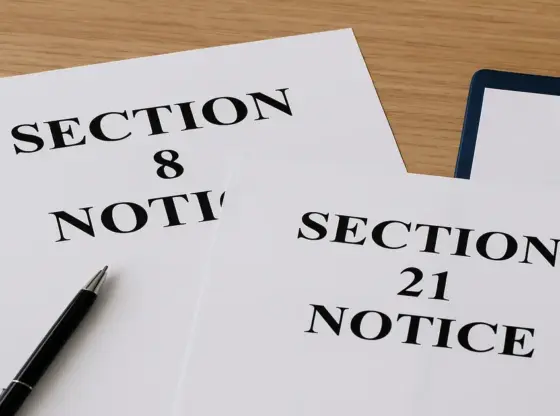
Before taking any action, landlords must determine the legal basis for eviction. The two primary routes under the Housing Act 1988 are:
Section 21 (No-Fault Eviction):
This notice allows a landlord to regain possession after the fixed term of an Assured Shorthold Tenancy (AST) ends. No reason is required, but the process must comply with procedural safeguards.
Section 8 (Fault-Based Eviction):
This notice is used when the tenant breaches the tenancy agreement — for example, by falling into rent arrears, causing damage, or engaging in antisocial behaviour. The landlord must rely on one or more of the grounds for possession listed in Schedule 2 of the Act.
Step 1: Check Compliance Before Serving Notice
Landlords must ensure that they have met all legal requirements before serving notice. Failure to comply will invalidate the eviction.
For Section 21, the landlord must have:
- Protected the tenant’s deposit in a government-approved scheme (DPS, MyDeposits, or TDS) within 30 days.
- Provided the prescribed information about the deposit.
- Supplied the tenant with:
- A valid Energy Performance Certificate (EPC)
- A Gas Safety Certificate (CP12)
- The current “How to Rent” guide
- Ensured the property is licensed adequately if required under HMO or selective licensing rules.
If any of these documents were missing or delayed, the landlord must correct the issue before serving notice.
Step 2: Choose the Correct Notice
Selecting the correct notice is crucial when deciding how to evict a tenant.
For Section 21 Notices:
- Use Form 6A (mandatory for ASTs in England).
- Provide at least two months’ notice.
- Ensure the notice period does not expire before the tenancy’s fixed term ends.
For Section 8 Notices:
- Use Form 3, specifying which legal grounds apply.
- Common examples include:
- Ground 8: At least two months’ rent arrears (mandatory ground).
- Ground 10: Some rent arrears (discretionary).
- Ground 11: Persistent delay in rent payment.
- Ground 12: Breach of tenancy terms.
- The notice period varies depending on the grounds, typically from two weeks to two months.
Step 3: Serve the Notice Properly
Once the correct form is prepared, the notice must be served correctly.
Acceptable methods include:
- Personal delivery to the tenant.
- Posting through the tenant’s letterbox.
- Sending by recorded delivery (keep proof of postage).
Always retain evidence of service such as a witness statement or postal receipt to present to the court if necessary.
Improper service is a common reason eviction cases fail, so landlords should follow the tenancy agreement’s notice clause strictly.
Step 4: Wait for the Notice Period to Expire
After serving the notice, landlords must allow the whole notice period to elapse before taking further steps. During this time, tenants may:
- Choose to leave voluntarily.
- Negotiate a payment plan or settlement.
- Remain in the property, requiring court action.
It is illegal to remove the tenant or change the locks without a court order. Doing so would breach the Protection from Eviction Act 1977 and could result in criminal prosecution.
Step 5: Apply for a Possession Order
If the tenant does not vacate after the notice period expires, the next step is to apply to the county court for a possession order.
For Section 21 cases:
- Use the accelerated possession procedure (Form N5B).
- This is faster because it doesn’t require a court hearing unless the tenant files a defence.
For Section 8 cases:
- Use Form N5 and N119 to request a hearing.
- The judge will consider evidence, including rent statements, tenancy agreements, and witness statements.
If the court grants possession, it will issue an order requiring the tenant to leave by a specified date, usually within 14 days.
Step 6: Enforce the Possession Order
If the tenant still refuses to vacate, landlords must request enforcement through the court.
Two enforcement options exist:
- County Court Bailiffs – standard route, slower but cost-effective.
- High Court Enforcement Officers (HCEOs) operate faster and require special permission from the court.
Landlords must not attempt to remove tenants personally. Only certified enforcement officers may carry out the eviction.
Step 7: Recover Rent Arrears or Damages
If rent arrears remain, landlords can pursue the tenant for payment even after possession is regained. Options include:
- Applying for a money judgment during the possession claim.
- Using the Small Claims Court if arrears are under £10,000.
- Tracing the tenant through credit agencies for enforcement purposes.
Landlords should maintain complete records — rent ledgers, correspondence, and evidence of breach — to support any claim.
Legal Safeguards and Exemptions
Certain tenancies and circumstances have special protections:
- Retaliatory Eviction Ban: Section 21 cannot be used within six months of a council improvement notice or emergency remedial notice under the Housing Act 2004.
- However, this does not apply when the landlord is selling the property or the tenant caused the disrepair.
- Discrimination and Harassment: Landlords must not evict based on protected characteristics under the Equality Act 2010 or use threats or intimidation to force departure.
- Deposit Non-Compliance: If the deposit was not adequately protected, Section 21 cannot be used unless it has been returned or the dispute has been resolved.
Common Mistakes to Avoid
Many landlords delay eviction or lose cases due to procedural errors. Key pitfalls include:
- Serving the wrong form or giving insufficient notice.
- Failing to provide an EPC, Gas Safety, or “How to Rent” guide.
- Using Section 21 before deposit protection compliance.
- Attempting self-help eviction.
- Overlooking licensing obligations under the Housing Act 2004.
Careful compliance and professional advice can save time, stress, and costs.
FAQs
Can I evict a tenant without a court order?
No. Evicting a tenant without a possession order and warrant of eviction is illegal.
Can I serve both Section 8 and Section 21 notices?
Yes. Many landlords issue both notices simultaneously to cover all legal bases.
How long does an eviction take in England?
The process typically takes between 8 and 16 weeks, depending on the court’s workload and tenant response.
Can I claim back unpaid rent?
Yes, you can pursue a money judgment through the court or as part of your possession claim.
Do I need a solicitor?
While landlords can represent themselves, complex cases such as rent arrears disputes or disrepair claims benefit from legal assistance.
Conclusion
Knowing how to evict a tenant legally in England is essential for every landlord. Following the proper procedure — from serving the correct notice to obtaining a court order ensures compliance with the law and prevents costly delays. Whether you use Section 21 for a no-fault eviction or Section 8 for breach of tenancy, every step must be precise and documented.
If in doubt, seek guidance from a professional landlord association or legal advisor to ensure the process is handled correctly from start to finish.
Read our top read blogs:
Why Landlords Are Selling Up Urgently?
The Renters Reform Bill: A Step Backwards for Landlords and the Housing Market?
Defending a Claim for Unlawful Eviction
Need help now? Contact Landlord Advice UK today for tailored guidance and practical support to future-proof your rental business.
Useful External Links
https://www.gov.uk/evicting-tenants
https://www.gov.uk/section-21-notices
https://www.gov.uk/section-8-notices