
Section 8: Possession Claim Costs: Court Fees and Legal Expenses Explained
Many landlords in England are uncertain about the costs associated with Section 8 possession claims when starting the eviction process.
Between unpaid rent, court fees, and solicitor expenses, it can be challenging to know how much the process will truly cost. Understanding these fees helps landlords budget accurately and avoid unexpected financial pressure.
This guide explains every cost involved in a Section 8 possession claim, from filing fees to legal representation and enforcement.
What Is a Section 8 Possession Claim?
A Section 8 possession claim is a legal process that allows landlords to evict tenants who have breached their tenancy agreement under the Housing Act 1988.
The most common reason is rent arrears, but other breaches, such as property damage or anti-social behaviour, can also apply.
Once the landlord serves a Section 8 notice and the tenant does not pay or leave, the landlord can apply to the court for possession. At this point, the main Section 8 possession claim costs begin to arise.
Court Fees for Section 8 Possession Claims
The first cost landlords face is the court fee. In 2025, the standard fees in England are:
- Online claim (Possession Claim Online – PCOL): £355
- Paper claim by post: £391
The online method is preferred because it is cheaper, faster, and allows you to track the claim’s progress. Once the claim is filed and the fee is paid, the court will set a hearing date, usually within 4 to 8 weeks.
The court fee covers the cost of processing the claim, notifying the tenant, and arranging the hearing. It is one of the main Section 8 possession claim costs you will need to pay upfront.
Legal Representation and Solicitor Costs
Many landlords choose to represent themselves in court to save money, but professional help can be valuable, primarily if the tenant defends the claim or the paperwork is complex.
Typical legal costs for a Section 8 possession claim include:
- Drafting and submitting court forms: £150–£350
- Solicitor attendance at the hearing: £300–£600
- Complete case handling (notice, claim, and hearing): £600–£1,000
Legal fees vary depending on the complexity of the case. If the tenant raises a defence such as disrepair or harassment allegations, the solicitor’s time and preparation costs can increase.
However, in most straightforward rent arrears cases, total legal costs remain manageable.
Bailiff and Enforcement Costs
Even after a landlord wins the possession order, some tenants still refuse to vacate. In this situation, additional Section 8 possession claim costs arise for enforcement.
You can choose between two enforcement options:
- County Court Bailiff (standard enforcement): about £130 and usually takes 4–6 weeks.
- High Court Enforcement (faster method): includes a transfer-up fee of £71, a Writ of Possession (£66), and officer fees (£300–£600).
High Court enforcement is more expensive but can reduce the waiting period to just one or two weeks. It is the preferred choice for landlords who need possession urgently or when tenants ignore previous orders.
Recovering Section 8 Possession Claim Costs
Most Section 8 possession claim costs can be recovered once the court grants possession. The judge may order the tenant to pay:
- The court fee.
- Fixed legal costs.
- Interest on unpaid rent.
However, recovery depends on the tenant’s financial situation. If the tenant has no assets or income, landlords might need to enforce the judgment through one of the following methods:
- Attachment of Earnings Order: deductions from the tenant’s wages.
- Third-Party Debt Order: recovery from the tenant’s bank account.
- County Court Judgment (CCJ): adds the debt to the tenant’s credit file and enforces payment later.
Recovering costs is not always immediate, but it ensures accountability for unpaid rent and legal fees.
Additional and Hidden Costs
Beyond the main expenses, landlords should be aware of more minor but standard Section 8 possession claim costs:
- Process server fees: £80–£150 if you use a professional to serve the Section 8 notice.
- Document printing and postage: £20–£40.
- Travel and parking: £20–£50 when attending court.
- Lost rent: while not a direct cost, ongoing arrears increase financial pressure during the process.
When combined, these additional expenses can bring the total cost of a Section 8 possession claim to around £700–£1,200 if self-represented and £1,000–£1,800 when using a solicitor.
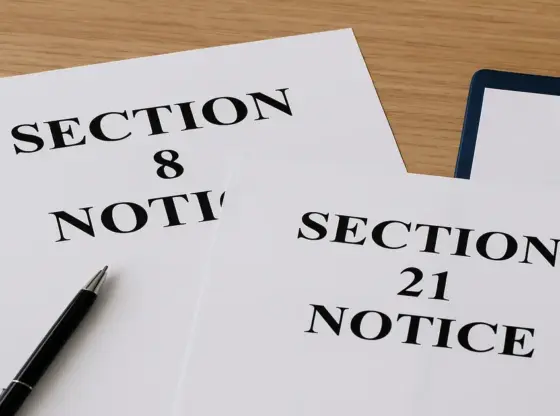
How Section 8 Costs Compare to Section 21
The Section 8 possession claim can be more expensive and time-consuming than a Section 21 claim, but it has one key advantage: landlords can claim unpaid rent in the same application.
A Section 21 (accelerated) claim is faster and often does not require a hearing, but it does not allow for rent recovery. By contrast, the Section 8 possession claim involves a court hearing but provides a complete legal remedy for both eviction and arrears.
For landlords dealing with rent arrears, Section 8 is usually the better long-term option.
How to Reduce Section 8 Possession Claim Costs
Landlords can significantly cut down Section 8 possession claim costs by taking a few simple steps:
- Serve the notice correctly: Use Form 3, include accurate dates, and state the correct grounds.
- File online: The PCOL system is cheaper and quicker than postal filing.
- Prepare evidence thoroughly: Include a rent statement, tenancy agreement, and proof of service.
- Avoid errors: Incorrect forms can result in case dismissal and extra fees.
- Use professional help wisely: A solicitor can ensure accuracy and save money by preventing mistakes.
Preventing minor errors early often saves hundreds of pounds later in the process.
When You Must Pay Section 8 Costs
The timeline of Section 8 possession claim costs generally unfolds as follows:
- At filing: Pay the court fee (£355–£391).
- Before hearing: Pay legal or representation fees.
- After possession order: Pay bailiff or enforcement fees if the tenant does not leave.
Landlords can request reimbursement of these costs once the possession order is granted, but enforcement may still be needed if the tenant refuses to pay.
FAQs
How much does a Section 8 possession claim cost in England?
Usually between £700 and £1,200 for self-handled cases, and £1,000 to £1,800 when a solicitor is involved.
Can I recover my Section 8 possession claim costs from the tenant?
Yes, if you win the case. The court can order the tenant to pay your costs, but enforcement may be necessary.
Are Section 8 possession claim costs the same across England?
Yes, court fees are fixed nationwide, but solicitor costs vary slightly by region.
Do I need to pay extra for bailiffs?
Yes. Bailiff or High Court enforcement adds £130–£600 to your total expenses.
Conclusion
Understanding Section 8 possession claim costs helps landlords plan and stay financially prepared. In most cases, expect to pay between £700 and £1,200, depending on whether you use professional representation.
The process can be cost-effective when done correctly. Serve notices accurately, file online, and keep detailed records.
Acting early and lawfully saves money and ensures a smooth possession process. A well-prepared Section 8 possession claim not only secures your property but also helps recover the rent arrears owed to you.
Read our top read blogs:
Why Landlords Are Selling Up Urgently?
The Renters Reform Bill: A Step Backwards for Landlords and the Housing Market?
Defending a Claim for Unlawful Eviction
Need help now? Contact Landlord Advice UK today for tailored guidance and practical support to future-proof your rental business.
Useful External Links
https://www.gov.uk/evicting-tenants
https://www.gov.uk/section-8-notice