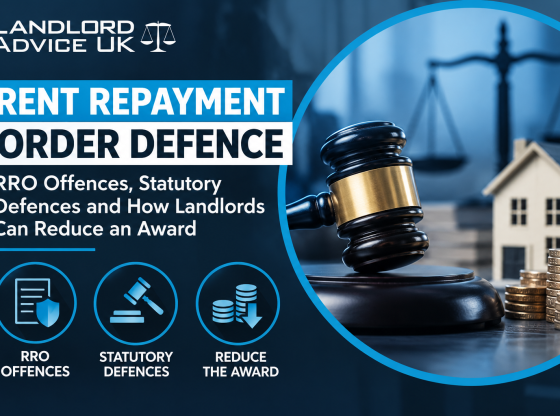

Sasha Charles: How to Defend an RRO
Defending an RRO, as outlined by Sasha Charles, requires a calm, strategic, and legally grounded approach. Rent Repayment Orders are among the most common actions taken against landlords in England.
These claims are often triggered by allegations of licensing issues, harassment, unlawful eviction, breaches of safety obligations, or failure to comply with statutory requirements.
Sasha Charles explains that the key to a strong defence is complete documentation, early preparation and a clear understanding of how tribunals assess evidence.
How to defend an RRO by Sasha Charles begins with recognising that an RRO is not a casual complaint. It is a financial penalty sought by the tenant or local authority. It can demand repayment of up to a full year of rent. This makes the stakes incredibly high for landlords.
A well-prepared defence can significantly reduce or eliminate the amount owed. Sasha Charles teaches that landlords should not panic. They should respond with a structured plan built on facts, records and lawful reasoning.
Understanding the Nature of the RRO Claim
How to defend an RRO by Sasha Charles starts with identifying the basis of the claim. The tenant must specify which offence they believe occurred.
These offences include failure to license a property, breach of management regulations, harassment, illegal eviction or breach of improvement notices. The landlord must understand the allegation precisely.
Sasha Charles advises that the defence begins with clarity. Without clarity, there is a risk of responding incorrectly or missing key points.
Once the claim is understood, the landlord can gather the relevant evidence. Every RRO defence is built on the landlord proving that the allegation is incorrect, exaggerated or lacking full context.
Gathering Strong Evidence
Evidence is the foundation for defending an RRO, by Sasha Charles. A landlord must gather documents, photos, certificates, reports, licenses, invoices and all communication logs.
The tribunal reviews these items carefully. Sasha Charles highlights that the tribunal prefers organised, chronological evidence over emotional statements.
Facts carry more weight than explanations without proof.
If the issue relates to licensing, proof of application, approval, or communication with the council becomes essential. If the claim concerns safety, the landlord must obtain certificates.
If the claim refers to harassment or access, communication logs become crucial. Sasha Charles emphasises that landlords who keep detailed records stand in a strong defensive position.
Showing Reasonable Excuse or Procedural Fairness
The tribunal recognises that some situations arise outside the landlord’s control. How to defend an RRO by Sasha Charles includes demonstrating that the landlord acted reasonably and responsibly at all times.
If a license application was made but delayed by the council, that is important. If the tenant obstructed access, that is relevant. If the landlord had taken steps to remedy the issues quickly, that would have helped the defence.
Sasha Charles explains that tribunals assess behaviour. They look at whether the landlord acted competently, consistently and fairly. When a landlord can show they behaved responsibly, the outcome is often more favourable.
Challenging the Tenant’s Evidence
Many tenants submit incomplete or inaccurate information with their RRO claim. Defending an RRO, as outlined by Sasha Charles, includes carefully reviewing their evidence.
The tenant must prove their allegation. They must provide proper proof of the offence. If their evidence lacks detail, lacks dates, or conflicts with their previous communication, the landlord can highlight this.
Sasha Charles teaches that pointing out inconsistencies in the tenant’s evidence can significantly weaken the claim. A landlord should do this calmly and factually. The tribunal will review both sides and will reduce or dismiss the RRO if the tenant’s case lacks strength.
Demonstrating the Tenant’s Conduct
How to defend an RRO by Sasha Charles also includes showing how the tenant behaved during the tenancy. Tribunals consider a tenant’s conduct when deciding how much, if any, rent should be repaid. If the tenant failed to allow access, refused repairs, ignored landlord communication, or breached the tenancy, these points are relevant.
Sasha Charles notes that tribunals recognise that tenants can cause delays or contribute to issues. A landlord must present evidence of this, such as texts, emails, letters or inspection logs. This can reduce the award significantly.
Explaining Proportionality and Mitigation
A key part of defending an RRO, according to Sasha Charles, is raising proportionality. The tribunal may reduce the award if full repayment would be unfair or disproportionate. Sasha Charles advises landlords to show evidence of efforts to comply, steps taken to fix issues, financial impact and prompt corrective action.
Tribunals do not punish landlords automatically. They balance fairness and reasonableness.
If the landlord can show they acted quickly and responsibly, even after discovering an issue, the tribunal often reduces the amount. Mitigation is a powerful defensive tool.
Preparing a Clean, Structured Case
Sasha Charles’s “How to defend an RRO“ requires a clean presentation. The defence should be structured, straightforward and easy for the tribunal to follow.
Each document should be labelled. Each event should be placed in order. Sasha Charles encourages landlords to prepare a concise written statement supported by evidence.
Tribunals value clarity. They appreciate a defence that is factual, well-organised and focused on the legal point. Long emotional explanations rarely help. Clear evidence always helps.
Attending the Tribunal Hearing
The final part of Sasha Charles’s “How to Defend an RRO“ is the hearing itself. The landlord should remain calm, polite and respectful. The tribunal panel will ask direct questions.
Sasha Charles teaches that landlords should answer clearly, stick to facts and refer to evidence when needed.
A well-prepared landlord often performs well at hearings. Confidence increases when the defence is built on documents, records and lawful arguments.
Conclusion
How to defend an RRO by Sasha Charles is a structured, evidence-led and disciplined process. A landlord who prepares early, gathers strong records, challenges weak allegations and presents a clear statement stands in a powerful defensive position.
Sasha Charles teaches that the tribunal is guided by fairness, evidence and the conduct of both parties. With proper preparation and clear organisation, landlords can defend an RRO effectively and protect themselves from unnecessary financial losses.
Read our top-read blogs:
Why Landlords Are Selling Up Urgently?
The Renters Reform Bill: A Step Backwards for Landlords and the Housing Market?
Defending a Claim for Unlawful Eviction
Need help now? Contact Landlord Advice UK today for tailored guidance and practical support to future-proof your rental business.
Useful External Links
https://www.gov.uk/private-renting