
How to Increase Rent Fairly and Avoid Tenant Challenges Under the Renters’ Rights Act 2025
The Renters’ Rights Act 2025 has reshaped how landlords can increase rent, emphasising fairness, transparency, and proper documentation.
Landlords who wish to raise rent must now comply with precise legal requirements and ensure that any adjustment is justified by market evidence.
This guide explains how to increase rent fairly and avoid tenant challenges under the Renters’ Rights Act 2025, helping landlords make lawful, defensible decisions while maintaining positive tenant relationships.
The Legal Definition of a “Fair Rent”
Under the Renters’ Rights Act 2025, a “fair rent” reflects current market conditions without being excessive or exploitative.
Rent increases must now comply with both the Act and the Consumer Rights Act 2015, which requires all terms to be fair, transparent, and reasonable.
The new law states that:
- Rent increases may occur only once every 12 months.
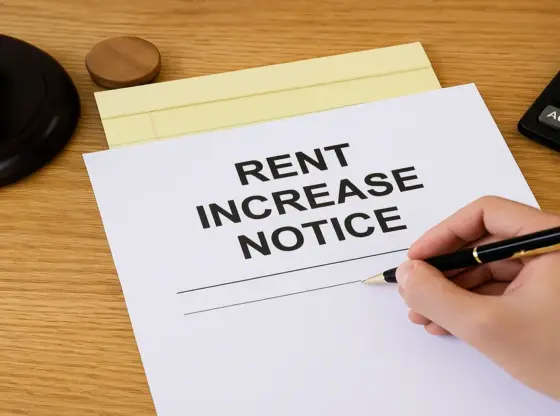
- Landlords must give at least two months’ written notice using the prescribed Section 13 form.
- Tenants have the right to challenge unfair rent increases at the First-tier Tribunal (Residential Property).
A fair rent must be based on the open market value — what similar properties in the area would reasonably rent for — while considering the property’s condition, facilities, and location.
Landlords who understand these principles will find it easier to navigate how to increase rent fairly and avoid tenant challenges under the Renters’ Rights Act 2025.
How to Use Market Data to Support Rent Increases
One of the most effective ways to justify a rent increase is by using market data. Tribunals and tenants alike expect landlords to provide evidence that a new rent reflects genuine market conditions rather than arbitrary figures.
Landlords should gather:
- Comparable rental listings from the same postcode or neighbourhood.
- Valuation reports from local letting agents.
- Online rental indexes such as Zoopla, Rightmove, or ONS property data.
- Documentation of property improvements that justify higher rent.
When proposing a rent increase, include a summary of the market evidence in your communication. This shows transparency and reduces the likelihood of a tenant challenge.
Being data-driven is essential when learning how to increase rent fairly and avoid tenant challenges under the Renters’ Rights Act 2025, as it proves your decision is reasonable and objective.
When Rent Tribunals Can Intervene
The Renters’ Rights Act 2025 gives tenants greater power to dispute rent increases through the First-tier Tribunal (Residential Property). Tribunals are designed to ensure rents remain fair and consistent with market standards.
A tenant may refer the proposed rent increase to the Tribunal before the effective date stated in the Section 13 notice. Once referred, the Tribunal will:
- Examine market data for similar local properties.
- Consider the property’s condition, size, and amenities.
- Review the landlord’s evidence supporting the rent increase.
- Determine whether the new rent is fair or excessive.
If the Tribunal decides that the proposed rent is too high, it can set a new fair rent, which becomes legally binding on both parties. Landlords cannot then issue another increase for at least 12 months.
To avoid disputes, landlords should ensure that all rent proposals are reasonable, evidence-backed, and clearly explained in writing. This proactive approach is key to mastering how to increase rent fairly and avoid tenant challenges under the Renters’ Rights Act 2025.
Effective Communication with Tenants to Avoid Disputes
Clear, respectful communication is one of the best tools for preventing rent disputes. Tenants are far less likely to challenge an increase if they understand the reasoning behind it and have been given proper notice.
Best practices include:
- Notify early — provide written notice well before the legal two-month minimum.
- Explain the rationale — outline how the rent increase reflects market conditions or property improvements.
- Offer flexibility—consider phased increases or negotiate if the tenant raises concerns.
- Keep records of all communications, including emails and letters.
A professional tone and transparent reasoning build trust, ensuring tenants view the increase as fair and justified. This approach aligns perfectly with the principles for fairly increasing rent and avoiding tenant challenges under the Renters’ Rights Act 2025.
Record-Keeping and Evidence of Reasonableness
Proper documentation is vital when proving that a rent increase is fair and compliant. Under the new law, landlords must maintain clear, dated records to demonstrate compliance if a challenge arises.
Key records to keep:
- Copy of the Section 13 rent increase notice.
- Proof of service, such as a postal receipt or signed delivery confirmation.
- Comparable market evidence (listings, valuations, or rental data).
- Property inspection reports and improvement records.
- Written correspondence with tenants regarding the increase.
Maintaining organised documentation protects landlords during Tribunal proceedings and provides a strong defence against allegations of unfair rent practices.
Good record-keeping is a central part of increasing rent fairly and avoiding tenant challenges under the Renters’ Rights Act 2025, ensuring your actions are transparent, defensible, and legally sound.
FAQs
How do tribunals decide if a rent is fair?
Tribunals assess fair rent by comparing the proposed rent with market averages for similar properties in the same area. They also consider factors such as the property’s size, condition, amenities, and any recent improvements made by the landlord.
What documentation helps defend against a tenant challenge?
Landlords should keep copies of the rent increase notice, market comparisons, valuation reports, and proof of service. Emails or letters explaining the rationale for the increase also help demonstrate transparency and good faith.
Conclusion
Knowing how to increase rent fairly and avoid tenant challenges under the Renters’ Rights Act 2025 is crucial for landlords who wish to remain compliant and maintain strong tenant relationships. By using market data, communicating clearly, and keeping accurate records, landlords can confidently justify rent adjustments. The Act rewards fairness and transparency, two principles that protect landlords from disputes while ensuring tenants are treated justly.
Read our top-read blogs:
Why Landlords Are Selling Up Urgently?
The Renters Reform Bill: A Step Backwards for Landlords and the Housing Market?
Defending a Claim for Unlawful Eviction
Need help now? Contact Landlord Advice UK today for tailored guidance and practical support to future-proof your rental business.
Useful External Links
https://www.legislation.gov.uk
https://england.shelter.org.uk
https://www.gov.uk/government/publications/renters-rights-act-2025-guidance