
Rent Arrears and Anti-Social Tenants: Lawful Eviction Options in 2025
Under the Renters’ Rights Act 2025, landlords across England face a redefined legal framework for managing rent arrears, anti-social tenants, and property damage.
While the abolition of Section 21 has removed “no-fault” evictions, the Act provides strengthened and lawful alternatives to regain possession when tenants breach their responsibilities.
Understanding how to navigate these lawful eviction options in 2025 is crucial for every landlord seeking to protect their investment while remaining compliant with the new legal standards.
Rent Arrears and Lawful Evictions Under the New Law
Persistent or severe rent arrears remain one of the most substantial grounds for eviction under the Renters’ Rights Act 2025. Although landlords can no longer issue a Section 21 notice, they retain the right to reclaim their property through mandatory grounds for possession.
Landlords can seek eviction where:
- A tenant owes two months’ rent (if paid monthly) or eight weeks (if paid weekly).
- The tenant has a repeated history of late or partial payments.
- There is clear evidence of financial default or non-cooperation.
The Act simplifies the process by allowing landlords to serve a rent arrears notice under the new Section 8-style system, citing the relevant possession ground. Courts will continue to treat serious arrears as mandatory for possession — meaning judges must order eviction once the arrears are proven.
This ensures landlords still have strong lawful eviction options in 2025 even without Section 21.
Evidence Required for Rent Arrears Eviction
Under the new law, landlords must present robust documentation to support their claim. This includes:
- A detailed rent schedule covering at least six months.
- Copies of communication with the tenant regarding missed payments.
- Proof that rent collection efforts were reasonable and transparent.
Digital submissions will make the court process more efficient, but the evidence must be precise. Any missing documentation can delay proceedings or result in the dismissal of the claim.
Landlords who maintain accurate rent ledgers and communicate professionally with tenants will find lawful eviction options in 2025 far more straightforward and defensible.
Anti-Social Behaviour: Fast-Track Eviction Grounds
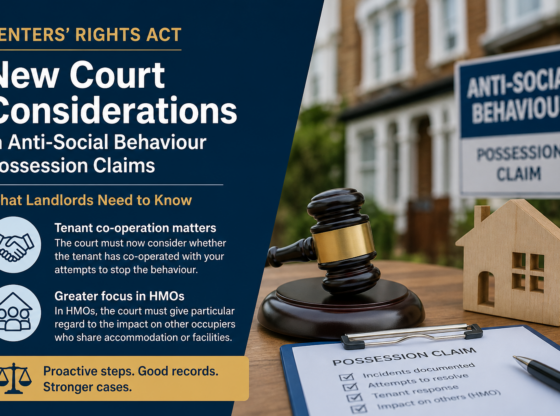
The Renters’ Rights Act 2025 introduces enhanced grounds for tackling anti-social behaviour and nuisance tenants. Landlords and neighbours often struggle with tenants causing disturbance, intimidation, or property damage. The new provisions allow quicker and more decisive action.
Anti-social behaviour now includes:
- Persistent noise disturbances.
- Harassment, threats, or violence toward neighbours or landlords.
- Damage to the property or communal areas.
- Criminal activity linked to the tenancy.
Landlords can issue an accelerated possession notice citing anti-social conduct. The court can fast-track these cases, reducing delays that previously left landlords and neighbours in distress.
The evidence typically required includes written complaints, witness statements, police reports, and video and photographic evidence. Landlords must ensure all evidence is lawfully obtained and accurately presented.
This ensures that lawful eviction options in 2025 remain balanced — protecting communities while safeguarding due process.
Property Damage as a Ground for Eviction
Property damage has always been a contentious issue between landlords and tenants. Under the Renters’ Rights Act 2025, damage that goes beyond normal wear and tear can serve as a valid ground for possession.
Landlords must show:
- Photographic or video evidence of the damage.
- Inspection reports before and after the tenancy.
- Repair quotes or invoices to demonstrate the extent of loss.
If the damage results from deliberate or reckless behaviour, the court may treat the eviction as a mandatory ground for eviction. For accidental or minor damage, the court may exercise discretion but can still grant possession if it deems the tenancy unsustainable.
These provisions make lawful eviction options in 2025 practical for landlords dealing with severe property deterioration or unsafe living conditions caused by tenants.
Balancing Landlord Rights and Tenant Protections
While the Renters’ Rights Act 2025 strengthens tenant security, it also empowers landlords to take action against irresponsible tenants. The law distinguishes between genuine hardship and deliberate misconduct, allowing fair judgments in eviction cases.
For landlords, this means:
- Eviction remains lawful if tenants breach key obligations.
- Courts will still uphold possession when grounds are proven.
- Procedural accuracy and evidence remain the deciding factors.
By maintaining compliance and records, landlords retain control over their properties without reverting to outdated “no-fault” systems.
Preparing for Eviction Under the New Act
To protect your rights effectively, landlords should:
- Use updated notice templates that comply with the Renters’ Rights Act 2025.
- Keep records of all tenant interactions, including payment reminders and warnings.
- Conduct regular property inspections with photographic documentation.
- Join professional landlord associations such as the BLA for access to current legal templates and expert guidance.
These proactive measures ensure lawful eviction options in 2025 remain available and enforceable when tenants breach their obligations.
FAQs
Can landlords still evict tenants for rent arrears in 2025?
Yes. Rent arrears remain a mandatory ground for possession under the new system, provided proper evidence is submitted.
Are evictions for anti-social behaviour faster now?
Yes. The Act allows accelerated hearings for anti-social tenants, reducing the time landlords wait for resolution.
What if a tenant damages the property?
Property damage beyond fair wear and tear is a valid ground for possession. Evidence such as inspection reports and photos is essential.
Can tenants challenge eviction claims?
Yes, but only if they can prove compliance or dispute the evidence. Courts will prioritise fairness while enforcing accountability.
Conclusion
The Renters’ Rights Act 2025 reshapes eviction law but still provides landlords with powerful lawful eviction options in 2025 for rent arrears, anti-social behaviour, and property damage.
By emphasising documentation, transparency, and legal compliance, the new system ensures that responsible landlords can protect their assets efficiently and fairly.
In the post–Section 21 era, landlords who understand the evidential standards and Act within the law can still recover possession swiftly and with confidence.
Read our top-read blogs:
Why Landlords Are Selling Up Urgently?
The Renters Reform Bill: A Step Backwards for Landlords and the Housing Market?
Defending a Claim for Unlawful Eviction
Need help now? Contact Landlord Advice UK today for tailored guidance and practical support to future-proof your rental business.