How Long Does an Eviction Take and How to Shorten the Timeline
With court backlogs at record levels and the Renters’ Rights Act 2025 introducing stricter compliance rules, landlords across England are facing longer waits to regain possession of their properties. On average, eviction cases now take up to 7 months from notice to enforcement, a costly and stressful process for landlords.
This article explains how long an eviction takes now, the leading causes of delay, and the practical steps landlords can take to shorten the timeline with professional support and precise legal action.
Average Eviction Timelines in 2025
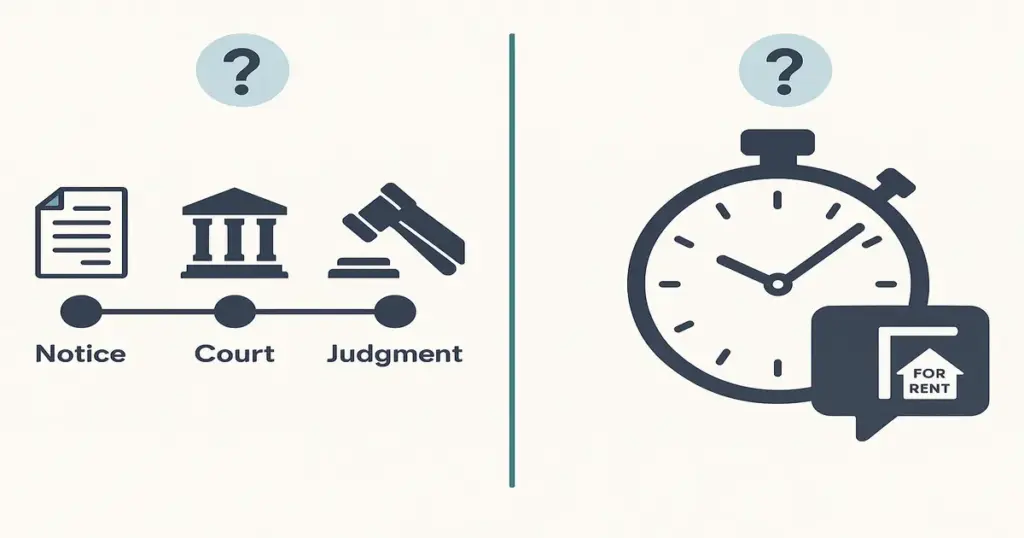
According to housing law reports and data from landlordzone.co.uk, the average eviction in England now takes between 25 and 30 weeks, or roughly 7 months, from start to finish.
Typical timeframes break down as follows:
- Notice period: 2–4 months, depending on the possession ground.
- Court processing and hearing: 8–12 weeks on average.
- Possession order to enforcement: 6–10 weeks (depending on bailiff availability).
While each case differs, landlords should anticipate several months before regaining possession unless they take strategic action to reduce delays. Knowing how long an eviction takes now helps landlords plan and mitigate financial losses.
Main Causes of Eviction Delays
Understanding why evictions take so long is the first step toward resolving the problem. Most delays are due to procedural errors, administrative backlogs, or inadequate preparation.
Court Backlogs
The county court system continues to experience severe delays following post-pandemic caseloads and staffing shortages. Many hearings are being scheduled three months or more after claim submission.
Incorrect Paperwork
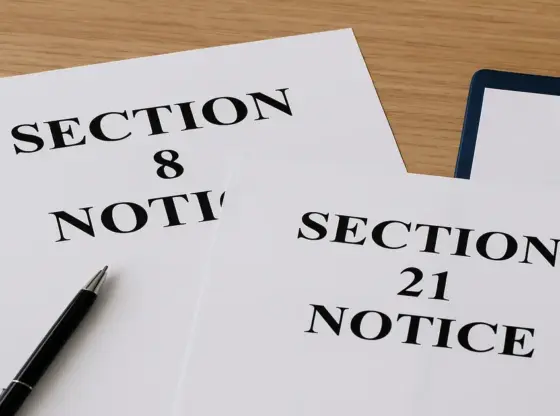
Errors in Section 8 or Section 21 notices are among the top reasons for delays or dismissed claims. Even small mistakes, such as missing dates or incorrect rent totals, can invalidate the notice, forcing landlords to restart the process from scratch.
Tenant Defences and Disputes
Tenants have increasing legal rights to challenge eviction notices. Unclear documentation or missing evidence can lead to adjournments or secondary hearings, significantly extending the timeline.
Bailiff Delays
Once a possession order is granted, landlords must still apply for a bailiff or High Court enforcement officer. Due to national demand, it can take 4–8 weeks to schedule an appointment.
Lack of Legal Representation
Landlords attempting DIY evictions often encounter procedural pitfalls. Without expert guidance, the process typically takes longer, costs more, and risks dismissal.
These bottlenecks show why professional assistance is now essential to shorten the eviction timeline and ensure compliance with the Renters’ Rights Act 2025.
How to Shorten the Eviction Process
While landlords cannot eliminate court delays, they can take specific steps to speed up each stage of the process.
Serve the Correct Notice Early
Act quickly when tenants fall into arrears or breach their tenancy. Under Section 8, serve notice as soon as two months’ arrears accrue. For rent increases or other issues, use the correct form and statutory timeframe.
Use Prescribed Legal Forms
Always use the latest government-approved forms, Form 3 for Section 8 or Form 6A for Section 21 (until it is entirely abolished). Ensure all details are accurate, including rent dates, arrears totals, and tenant names.
Prepare Evidence in Advance
Courts favour landlords who provide well-organised documentation. Prepare copies of the tenancy agreement, rent schedule, communication logs, and deposit protection details before filing.
File Claims Online
Using the Possession Claim Online (PCOL) system reduces filing time and allows landlords to track case progress electronically. Paper submissions often take longer to process.
Apply for High Court Enforcement
Once a possession order is granted, landlords can request High Court enforcement rather than wait for county court bailiffs. Though slightly more expensive, it typically reduces enforcement time from eight weeks to two.
Seek Professional Eviction Support
Specialist eviction services handle notice drafting, filing, and representation, ensuring accuracy, efficiency, and compliance. This can shave four to six weeks off the total timeline and prevent costly errors.
By following these measures, landlords can regain control faster, reduce stress, and protect rental income while staying within the law.
How Professional Eviction Services Speed Up the Process
Our eviction experts manage every stage of the process, helping landlords achieve possession as quickly and smoothly as possible.
What we do:
- Draft and serve legally compliant notices (Section 8 or Section 21).
- Prepare and file court claims with complete evidence.
- Represent landlords at hearings to avoid procedural delays.
- Coordinate High Court enforcement for faster possession.
- Communicate with tenants to encourage voluntary surrender where possible.
Professional handling eliminates common causes of delay, such as incorrect forms, missing documents, or insufficient evidence, ensuring each step progresses efficiently. With our support, landlords often reduce eviction timeframes by several weeks, turning a seven-month ordeal into a much faster resolution.
For immediate help or same-day notice preparation, visit Landlord Advice UK, the trusted specialist in fast, lawful tenant evictions across England and Wales.
FAQs
How long does an eviction take on average in 2025?
The average eviction now takes about 7 months, depending on court workload, bailiff availability, and the type of notice. However, with expert assistance, landlords can often reduce this to four or five months.
Can I speed up the process if tenants won’t leave after a court order?
Yes. Transferring the case to High Court enforcement officers can dramatically reduce waiting times, as they are faster and more efficient than county court bailiffs.
Conclusion
Understanding how long an eviction takes now allows landlords to plan realistically, but knowing how to shorten the timeline ensures they stay in control.
Most delays stem from procedural errors and administrative backlog problems that can be avoided through professionalism, preparation, and prompt action.
Partnering with experienced eviction specialists helps landlords recover possession faster, minimise income loss, and remain compliant with the Renters’ Rights Act 2025.
Read our top-read blogs:
Why Landlords Are Selling Up Urgently?
The Renters Reform Bill: A Step Backwards for Landlords and the Housing Market?
Defending a Claim for Unlawful Eviction
Need help now? Contact Landlord Advice UK today for tailored guidance and practical support to future-proof your rental business.
Useful External Links
https://www.gov.uk/evicting-tenants
https://www.gov.uk/government/publications/renters-rights-act-2025-guidance