
Evicting a Problem Tenant Safely in 2025: What Every England Landlord Must Know
The Renters’ Rights Bill 2025 has transformed how landlords in England can legally remove tenants. The end of Section 21 “no-fault” evictions means that every possession claim must now be justified under specific legal grounds.
For landlords dealing with difficult or non-paying tenants, understanding how to evict safely and lawfully is essential to avoid costly delays or criminal penalties.
This guide outlines exactly what landlords must do to evict a problem tenant in 2025, step by step safely, legally, and efficiently.
The New Legal Framework for Evictions
With the abolition of Section 21, landlords no longer have the right to remove tenants without reason. All evictions must now be made under Section 8 of the Housing Act, as amended by the Renters’ Rights Bill 2025.
Under this new system, landlords must provide a valid legal ground for possession and back it up with clear evidence. The law is designed to protect good tenants while still allowing responsible landlords to act swiftly against problem tenants.
Common reasons for eviction now include:
- Rent arrears or persistent late payments.
- Anti-social or criminal behaviour.
- Property damage or neglect.
- Breach of tenancy conditions.
- The landlord needs to sell the property or move back in.
Every eviction must follow this new structure or it will be deemed invalid by the courts.
Step 1: Identify the Legal Ground for Possession
To begin the eviction process safely, landlords must choose the correct legal ground under Section 8. The main options are:
Ground 8 – Serious Rent Arrears
- Mandatory ground.
- Tenant must owe at least two months’ rent at the time of the hearing.
Ground 10 – Persistent Late Payment
- Discretionary ground.
- Useful when tenants repeatedly pay late, even if not in full arrears.
Ground 12 – Breach of Tenancy
- Covers breaches such as unauthorised pets, subletting, or misuse of the property.
Ground 14 – Anti-Social Behaviour
- Immediate action for tenants causing nuisance, threats, or criminal activity.
Ground 1 – Landlord or Family Move-In
- Allows eviction when the landlord or a close family member intends to live in the property.
Ground 2 – Sale of the Property
- For landlords wishing to sell, with proof of genuine intent.
Choosing the correct ground determines the notice period, evidence required, and the likelihood of success in court.
Step 2: Serve a Legally Valid Possession Notice
Once the appropriate ground is identified, landlords must issue a Section 8 notice. This is the first formal step in the legal eviction process.
Key requirements for a valid notice include:
- Use the correct updated form – The government-issued Section 8 form revised for 2025 must be used.
- Specify the ground(s) – Include the legal ground number and a clear explanation of the reason for eviction.
- Provide supporting evidence – Attach or refer to documents such as rent statements, inspection reports, or witness complaints.
- Observe the correct notice period –
- 14 days for rent arrears or anti-social behaviour.
- 2 months’ notice for sale or move-in.
- Serve notice correctly – Deliver in person, by recorded post, or by email if allowed in the tenancy agreement.
Retain proof of service, such as postal receipts or signed acknowledgements. This will be crucial in court.
Step 3: Apply for Possession Through the Court
If the tenant fails to leave after the notice period, landlords must apply for a possession order. This process is now managed through the digital possession portal introduced by the Renters’ Rights Bill 2025.
To file your claim:
- Upload the Section 8 notice and proof of service.
- Submit tenancy documents (agreement, deposit protection, EPC, safety certificates).
- Include evidence of arrears, breaches, or misconduct.
The court will then review your claim and either:
- Grant possession automatically for mandatory grounds (such as serious arrears), or
- Schedule a hearing for discretionary grounds (such as anti-social behaviour).
Digital filing reduces paperwork and speeds up processing times, though accuracy remains vital.
Step 4: Attend the Court Hearing (If Required)
If a hearing is scheduled, both the landlord and tenant may present their evidence. The judge will decide whether the claim is justified.
To increase your chances of success:
- Arrive early and organised.
- Bring all relevant documents — rent schedules, inspection photos, communication logs, and notices.
- Remain professional and factual.
- Avoid emotional language or personal confrontation.
If successful, the court will issue a possession order, typically requiring the tenant to vacate within 14 days (or up to 42 days if hardship is proven).
Step 5: Enforce the Possession Order
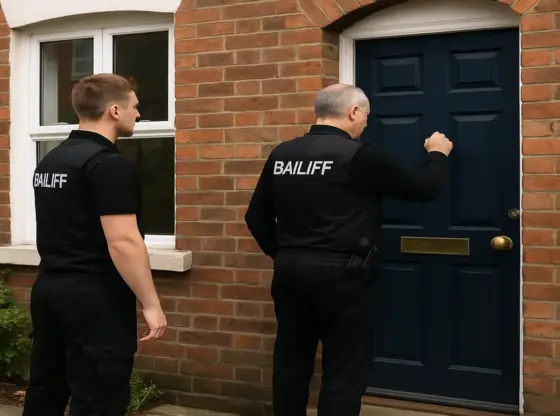
If the tenant still refuses to leave after the possession order expires, landlords must apply for enforcement through bailiffs or High Court Enforcement Officers.
Important reminders:
- Only certified enforcement officers can remove tenants.
- Landlords cannot change locks or enter the property without a court order.
- Attempting a “self-help” eviction is a criminal offence under the Renters’ Rights Bill 2025.
Once bailiffs execute the order, the property is legally repossessed, allowing landlords to secure and prepare it for re-letting or sale.
Step 6: Recovering Rent Arrears
After possession is granted, landlords can seek a money judgment for unpaid rent.
This allows landlords to:
- Deduct arrears from the tenant’s deposit.
- Enforce payment through bailiffs or wage attachment.
- Register the debt with credit reference agencies.
Timely documentation of rent arrears and communications will strengthen your claim.
How to Avoid Delays and Legal Pitfalls
Under the new eviction framework, even minor procedural errors can cause significant delays. To evict a problem tenant safely and efficiently, landlords must avoid:
- Using outdated or incorrect notice forms.
- Failing to protect the deposit adequately.
- Missing required compliance documents (EPC, gas safety, EICR).
- Serving notice before resolving licensing issues.
- Lacking proof of service.
Courts will reject any claim that fails to meet full compliance standards.
Fast-Track Options for Serious Misconduct
For severe cases of anti-social behaviour or criminal activity, the Renters’ Rights Bill 2025 allows landlords to take immediate action under Ground 14.
This ground requires no minimum notice period. With police reports or neighbour statements as evidence, landlords can begin proceedings right away. Courts prioritise these cases for faster hearings and possession orders.
When to Seek Professional Help
Given the complexity of eviction law in 2025, many landlords now use professional eviction services or solicitors. These experts ensure that:
- All paperwork is correct and compliant.
- Evidence is presented correctly.
- Possession claims are filed through the proper channels.
- Landlords avoid accusations of illegal eviction.
Professional support can often mean the difference between a quick possession and months of delay.
Preventing Future Problem Tenants
Once possession is regained, prevention becomes key. Landlords can avoid future disputes by:
- Conducting thorough background checks — including credit, employment, and landlord references.
- Using detailed tenancy agreements with clear clauses on rent, conduct, and access.
- Performing regular inspections to catch issues early.
- Keeping clear communication records with tenants.
- Acting quickly on early signs of arrears or misconduct.
A proactive approach prevents minor problems from escalating into full legal disputes.
Protecting Yourself Under the Renters’ Rights Bill 2025
The new law aims to balance tenant rights with landlord accountability. By staying compliant and using the legal process correctly, landlords retain complete protection and control.
Remember:
- Always document everything — notices, rent ledgers, emails, and inspection reports.
- Remain professional and avoid personal conflict with tenants.
- Do not take physical or informal action to remove a tenant.
- Use professional guidance when in doubt.
Proper documentation and lawful conduct are your best defences in 2025’s stricter legal climate.
Common Landlord Questions Answered
Can I still evict a tenant who causes problems?
Yes you must use the Section 8 process and prove a valid legal ground such as arrears, breach, or anti-social behavior.
What happens if I evict a tenant illegally?
Illegal eviction is a criminal offence and can result in fines, compensation claims, and prosecution.
Can I evict faster for rent arrears?
Yes, serious rent arrears (two months or more) are a mandatory ground for possession and are often resolved quickly.
Read our top-read blogs:
Why Landlords Are Selling Up Urgently?
The Renters Reform Bill: A Step Backwards for Landlords and the Housing Market?
Defending a Claim for Unlawful Eviction
Need help now? Contact Landlord Advice UK today for tailored guidance and practical support to future-proof your rental business.
Useful External Links
https://www.gov.uk/private-renting