When Your Tenant Won’t Leave: Legal Steps to Evict Without Delay
When a tenant refuses to leave your property after the tenancy has ended or after being served notice, it can be one of the most stressful situations a landlord faces. Under the Renters’ Rights Bill 2025, landlords must now follow a precise legal procedure to evict a tenant; gone are the days of quick, no-fault removals.
This guide outlines the legal steps to evict without delay, explaining how landlords can navigate the new framework confidently, recover possession, and avoid costly mistakes.
Understanding the Law: No More Section 21 Evictions
The abolition of Section 21 marks a significant shift in the eviction process. Landlords can no longer evict tenants without providing a valid reason. All evictions must now go through the updated Section 8 process under the Renters’ Rights Bill 2025.
This change ensures greater fairness but also demands full compliance from landlords. If your tenant won’t leave, you must act lawfully; any misstep could invalidate your notice or lead to accusations of illegal eviction.
When Can You Legally Evict a Tenant?
Landlords can only seek possession under specific grounds set out in the new Section 8 framework. These include:
- Serious Rent Arrears – When the tenant owes two months’ rent or more.
- Persistent Late Payment – Repeated delays in rent, even if arrears are later cleared.
- Anti-Social Behaviour – Threatening conduct or nuisance to neighbours.
- Property Damage – Intentional or severe neglect of the premises.
- Landlord Selling the Property – Genuine intent to sell can justify possession.
- Landlord or Family Move-In – The landlord or a close family member intends to occupy the property.
Each ground has a different notice period and requires clear evidence. Acting without proof or serving the wrong notice can significantly delay eviction.
Step 1: Serve the Correct Possession Notice
When your tenant refuses to vacate, your first action must be to serve a valid possession notice under Section 8.
Follow these steps carefully:
- Use the Correct Legal Form
- The government’s updated Section 8 form must be used. Generic or old templates are invalid.
- Specify the Correct Grounds
- Clearly state which ground applies (e.g., rent arrears, sale, or move-in) and include supporting evidence such as rent ledgers or proof of sale intent.
- Give the Proper Notice Period
- Two weeks for rent arrears or anti-social behaviour.
- Two months to sell or move back in.
- Keep Proof of Service
- Deliver the notice in person or by recorded post and keep dated proof. Courts will reject your claim without evidence of proper delivery.
If the tenant still doesn’t leave after the notice period expires, you can move to the next step — applying for possession through the courts.
Step 2: File a Possession Claim in Court
Under the Renters’ Rights Bill 2025, all possession claims now go through the digital possession portal, designed to streamline the process.
When filing your claim:
- Submit a copy of your Section 8 notice.
- Provide evidence of arrears or breaches.
- Upload supporting documents (EPC, gas safety certificate, deposit protection proof, tenancy agreement).
The court will review your claim and either:
- Grant possession automatically for mandatory grounds (like serious arrears), or
- Schedule a hearing on discretionary grounds (such as persistent late payment or anti-social behaviour).
Having all documentation in order speeds up approval and avoids unnecessary adjournments.
Step 3: Attend the Court Hearing (If Required)
If your case goes to a hearing, both you and the tenant will have an opportunity to present evidence.
The judge will review:
- Whether the notice was served correctly.
- Whether all compliance documents were provided.
- Whether the grounds for eviction are genuine and supported by evidence.
If successful, the court will issue a possession order, usually giving the tenant 14 days to leave the property. In some cases, this may be extended to 42 days if the tenant faces hardship.
Step 4: Enforce the Possession Order
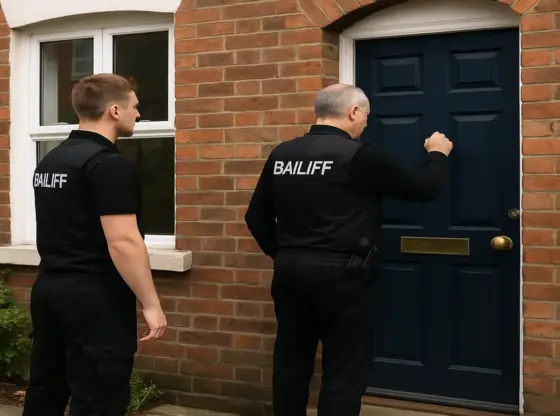
If the tenant still refuses to leave after the possession order deadline, landlords must apply for enforcement through bailiffs or High Court enforcement officers.
Only authorised enforcement agents can legally remove tenants — landlords cannot take matters into their own hands. Attempting to change locks or remove belongings without a court order is a criminal offence under the Renters’ Rights Bill 2025.
To enforce quickly:
- Apply for a warrant of possession immediately after the deadline.
- Keep copies of all court orders and communication.
- Coordinate with enforcement officers to schedule the eviction date.
Bailiff appointments are typically set within a few weeks, ensuring lawful recovery of your property.
Step 5: Recover Unpaid Rent
Alongside possession, landlords can claim for rent arrears within the same court proceedings. If approved, the court will issue a money judgment, which allows you to:
- Deduct from the tenant’s deposit.
- Recover funds through bailiffs or High Court enforcement.
- Report unpaid judgments to credit agencies.
Acting promptly and documenting arrears improves the likelihood of successful recovery.
Avoiding Common Delays and Mistakes
Evictions often take longer than necessary due to avoidable errors. To evict without delay, landlords should avoid these pitfalls:
- Using the wrong notice form or old templates.
- Failing to protect the tenant’s deposit.
- Missing compliance certificates (EPC, gas, electrical).
- Incorrect notice periods.
- Incomplete or missing evidence of arrears.
Every detail matters. Courts now reject claims that fail to meet even one procedural requirement.
When Your Tenant Still Refuses to Leave
If your tenant refuses to vacate despite a possession order and bailiff involvement, stay calm and professional.
Please do not attempt to remove them yourself. Instead:
- Contact the local enforcement office to confirm the eviction date.
- Keep a record of all communication with the tenant and bailiffs.
- Secure the property immediately upon regaining lawful possession.
Once repossessed, change the locks and take photographs to confirm the property’s condition. You may also need to arrange repairs or cleaning before re-letting.
Dealing with Rogue or Abusive Tenants
The Renters’ Rights Bill 2025 gives landlords potent legal remedies against rogue tenants. If the tenant engages in threatening behaviour, property damage, or harassment:
- Report incidents to the police and local authority.
- Gather evidence — videos, photos, and witness statements.
- Apply for immediate possession under Ground 14 (anti-social behaviour).
Courts prioritise such cases and grant swift possession where serious misconduct is proven.
How to Prevent Future Problems
To avoid repeat scenarios where tenants refuse to leave:
- Conduct thorough tenant referencing (credit checks, employment verification, landlord references).
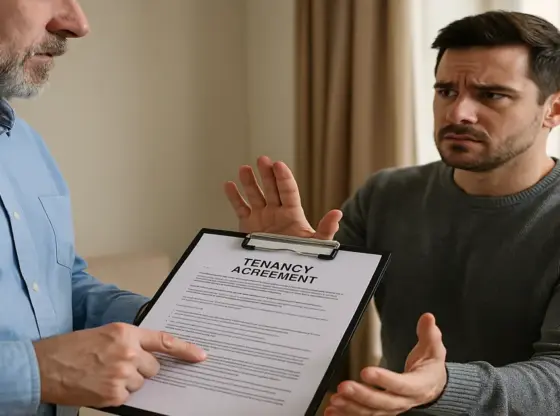
- Use an explicit, written tenancy agreement outlining expectations.
- Collect a sufficient deposit and protect it immediately.
- Maintain regular communication with tenants to address problems early.
- Work with professional letting agents or eviction specialists when disputes arise.
Proactive management is the key to avoiding costly evictions.
Why Professional Help Saves Time and Money
Many landlords now rely on professional eviction experts to handle the process under the Renters’ Rights Bill 2025. These specialists:
- Draft and serve compliant Section 8 notices.
- Prepare possession claims with all required documentation.
- Represent landlords in court.
- Liaise with bailiffs for enforcement.
Their expertise ensures each step is legally correct and completed as quickly as possible, preventing the costly setbacks of a rejected claim.
Common Landlord Questions Answered
What should I do if my tenant refuses to leave after the notice expires?
Apply for a possession order through the court immediately. Only a court order and bailiff enforcement can legally remove a tenant.
How long does the eviction process take?
Depending on the court’s schedule, most cases take 6–10 weeks when all paperwork is correct.
Can I change the locks myself?
No. Changing locks without a possession order is considered illegal eviction and can result in criminal penalties.
Read our top-read blogs:
Why Landlords Are Selling Up Urgently?
The Renters Reform Bill: A Step Backwards for Landlords and the Housing Market?
Defending a Claim for Unlawful Eviction
Need help now? Contact Landlord Advice UK today for tailored guidance and practical support to future-proof your rental business.
Useful External Links
https://www.gov.uk/private-renting