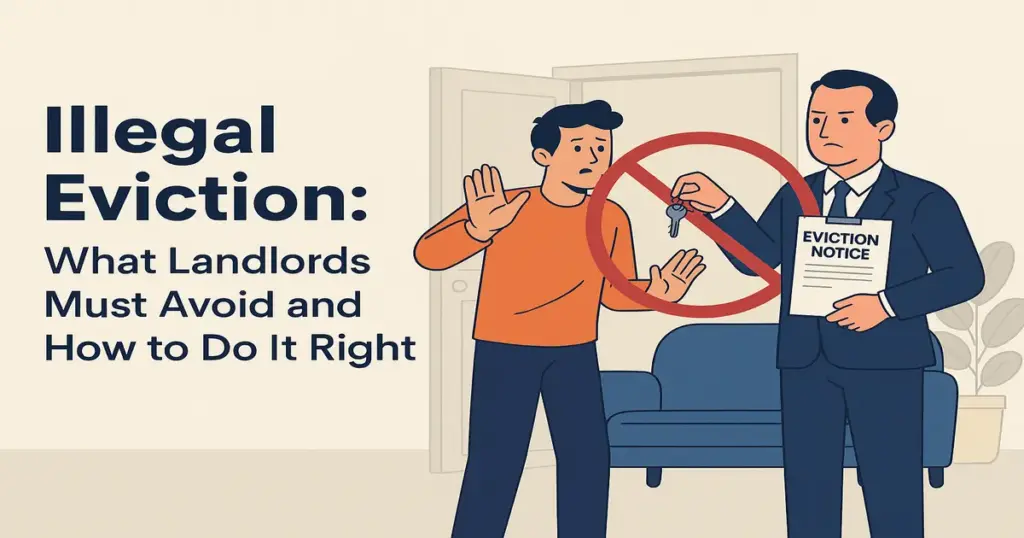
Illegal Eviction: What Landlords Must Avoid and How to Do It Right
Many landlords facing problem tenants feel desperate to regain control of their property quickly. But acting without following the law can lead to serious consequences.
Understanding what constitutes illegal eviction and how to handle the process correctly is essential for landlords seeking to stay compliant and protect their reputation.
This guide explains what landlords must avoid and how to evict tenants legally, safely, and efficiently with expert help.
What Is Considered an Illegal Eviction in England?
An illegal eviction occurs when a landlord or agent removes a tenant without following the correct legal process. This includes any attempt to force a tenant out of their home without a valid court order.
Actions that can be classed as illegal eviction include:
- Changing the locks while the tenant still lives in the property.
- Removing a tenant’s belongings without consent.
- Threatening or harassing the tenant to make them leave.
- Cutting off utilities like water, gas, or electricity.
- Entering the property without permission or notice.
Under the Protection from Eviction Act 1977, such actions are criminal offences. Convicted landlords can face fines, imprisonment, and civil claims for damages.
So if you’re asking how to handle eviction properly or wondering what landlords must avoid, remember that no action can be taken without lawful possession procedures being completed.
Why Illegal Eviction Is So Risky for Landlords
When landlords take matters into their own hands, they not only risk prosecution but also lose credibility in any legal dispute.
Local councils have the authority to prosecute landlords for unlawful eviction, and courts can order compensation to the tenant, sometimes up to several thousand pounds. In severe cases, imprisonment is possible.
Moreover, a record of unlawful eviction can damage a landlord’s professional reputation and affect their ability to let future properties.
That’s why understanding what counts as illegal eviction and seeking professional eviction help is vital.
The Legal Eviction Process: Doing It Right
When eviction is necessary, the right approach always starts with the correct notice. To stay compliant, landlords must follow one of two lawful routes:
Section 8 Notice (Fault-Based Eviction)
Used when tenants breach the tenancy agreement, such as falling into rent arrears or causing damage. Depending on the grounds, the notice period can range from 2 weeks to 2 months.
Section 21 Notice (No-Fault Eviction)
Used to regain possession at the end of a tenancy or during a rolling period without stating a reason. The landlord must give at least 2 months’ notice and comply with all preconditions, such as deposit protection, EPC, gas certificate, and delivery of the “How to Rent” guide.
Once the notice expires and the tenant does not vacate, the landlord must apply for a court possession order. Only once the court grants possession can bailiffs or High Court enforcement officers legally remove the tenant.
That is how landlords can do it right, lawfully, efficiently, and without risk of prosecution.
Signs You’re at Risk of an Illegal Eviction Claim
Even well-intentioned landlords can unknowingly cross the line. You may be at risk if you:
- Enter the property without 24 hours’ written notice.
- Communicate aggressively or repeatedly in person.
- Remove furniture or fittings while the tenant still resides there.
- Attempt to “negotiate” eviction through threats or intimidation.
- Try to take possession without a formal court order.
If you recognise any of these actions, stop immediately and seek legal advice. A professional eviction company like Landlord Advice can take over, ensuring every step is compliant.
How to Evict Tenants Safely and Legally
If you want to avoid the risks of illegal eviction and recover your property quickly, follow these steps:
- Serve a valid Section 8 or Section 21 notice.
- Ensure all certificates, deposit documents, and tenancy terms are in order.
- Wait for the notice period to expire.
- Do not change locks or interfere with the tenant’s occupation during this time.
- Apply for a possession order.
- Submit a claim to the county court if the tenant does not leave voluntarily.
- Request a warrant of possession.
- This allows the court’s bailiff to remove the tenant lawfully.
- Use professional eviction specialists.
- Experts like Landlord Advice manage the paperwork, represent you in court, and ensure total compliance.
Following these steps guarantees that eviction is done right, not rushed, and never illegal.
How Landlord Advice Protects You from Legal Risk
At Landlord Advice, we specialize in legal tenant evictions across England and Wales. Our team handles everything from notice drafting to court hearings and enforcement.
We help landlords avoid errors, delays, and the severe penalties associated with illegal eviction. Every action we take complies fully with housing law and court procedure.
Our services include:
- Preparing and serving Section 8 or 21 notices.
- Filing possession claims and managing court paperwork.
- Liaising with bailiffs and High Court enforcement officers.
- Advising on rent arrears recovery and compliance.
- Providing expert guidance on complex tenancy issues.
We don’t just remove tenants, we protect landlords’ legal and financial interests at every step.
Why Compliance Builds Trust
Landlords who follow the legal process demonstrate professionalism and reliability. Tenants, local authorities, and courts recognise compliance as a sign of integrity.
By avoiding illegal eviction and working with a professional company, landlords safeguard their business reputation, reduce stress, and regain possession faster.
Compliance isn’t just a legal obligation; it’s a business advantage.
When to Call for Help
If you’re frustrated, losing rent, or facing a tenant who refuses to leave, do not risk acting alone. Contact Landlord Advice before taking further steps. Our experts will review your situation, ensure all paperwork is correct, and take immediate lawful action to recover your property.
It’s the safest and most efficient way to end a tenancy without risking fines, delays, or prosecution.
FAQs
What is the penalty for illegal eviction in England?
Landlords can face fines, imprisonment, or orders to pay the tenant compensation for distress and loss.
Can I evict a tenant without going to court?
No. A possession order from the court is always required unless the tenant leaves voluntarily.
What if my tenant is aggressive or refuses communication?
Avoid confrontation. Let a professional eviction company handle all contact to prevent any claims of harassment.
Can I change the locks once the tenant moves out?
Yes, but only after you’re certain they have vacated and surrendered possession voluntarily or by court order.
Conclusion
Illegal eviction damages landlords’ credibility, finances, and legal standing. The only safe path is to follow the correct legal procedure from start to finish.
If you’re unsure or facing resistance from a tenant, Landlord Advice can manage the entire eviction process for you lawfully and efficiently.
With expert guidance, landlords can avoid the risks of illegal eviction and lawfully maintain control of their property.
Read our top read blogs:
Why Landlords Are Selling Up Urgently?
The Renters Reform Bill: A Step Backwards for Landlords and the Housing Market?
Defending a Claim for Unlawful Eviction
Need help now? Contact Landlord Advice UK today for tailored guidance and practical support to future-proof your rental business.
Useful External Links
https://www.gov.uk/evicting-tenants